
Montenegro Wine Tourism: The Complete Visitor's Guide
Montenegro is a small country that does not receive enough credit as a wine destination. It sits between two worlds, Mediterranean and Balkan, coastal and continental, ancient and still largely undiscovered by international wine tourism. The country has been producing wine for over two thousand years, its flagship grape Vranac is unlike anything grown in Western Europe, and its most compelling visitor experiences range from one of the largest single vineyards on the continent to intimate family estates where 28 generations of winemaking tradition are poured into a single glass. This guide covers the full picture: the history that explains why Montenegrin wine tastes the way it does, the regions where it is grown, the varieties worth knowing, the experiences available to visitors, and how to plan an itinerary that does justice to one of the Balkans' most underrated wine cultures.
A Brief History of Wine in Montenegro
Wine production in Montenegro can be traced back over two thousand years, through Greek colonization, Roman expansion, the Middle Ages, and a succession of empires that shaped both the culture and the viticultural character of the country's indigenous grape varieties.
The story begins with the Ancient Greeks, who introduced viticulture to the eastern Adriatic coast during their colonization of the region. Under the Roman Empire, wine production in the territory that is now Montenegro expanded substantially, and the ruins of Roman settlements across the country reflect a wine culture deeply woven into the social and economic fabric of the time. The area around what is now Podgorica, near the ruins of the ancient Roman city of Dolcea, was among the most productive viticultural zones in the Roman Adriatic.
The Third Crusade in the late 12th century provides one of the most evocative documented references to Montenegrin wine. As Frederick Barbarossa's forces passed through the region on their way to the Holy Land, they reportedly camped near the ruins of what is now the Radevic Estate territory. Contemporary accounts noted that the crusaders were served figs, pomegranates, and good wine, a description that speaks to the quality and abundance of local viticulture in a period when most of Europe's wine production was concentrated further west.
The rise of the Ottoman Empire beginning in the late 14th century brought significant disruption to wine production across the Balkans. Islamic law restricted the production and consumption of alcohol, and the viticulture that had flourished under Roman and Byzantine influence contracted substantially. The slow reorganization of Montenegrin winemaking began after the Ottoman Empire's decline in the late 19th century, but the industry faced further upheaval through successive kingdoms, the Yugoslav communist era, and the political transitions of the late 20th century.
The modern renaissance of Montenegrin wine has been remarkable given this history. Since the country's first Wine Law was adopted in 2007 and a Wine Protocol was signed with the European Union, the number of registered wineries grew from 4 in 2007 to over 113 by 2024, according to data from the Organisation Internationale de la Vigne et du Vin and Montenegrin viticulture registry records. The indigenous grape varieties that survived centuries of turbulence, particularly Vranac and Kratosija, are now the foundation of a wine identity that is distinct from anything else in Europe.
The full story of how the Radevic family's estate fits within this history is told on the estate history page, where twenty-eight generations of winemaking tradition are traced against the broader arc of Montenegrin viticulture.
The Wine Regions of Montenegro
Montenegro has two official wine regions, the Skadar Lake Basin and the Coastal Region, with the Skadar Lake Basin accounting for approximately 95% of registered vineyard area and containing the most significant wine tourism destinations.
The official classification of Montenegrin wine regions is documented by Wine of Montenegro, which provides the formal registry of producers and subregional designations. For visitors planning a wine tourism itinerary, the following overview covers the key areas and what distinguishes each.
Skadar Lake Basin (Podgorica)
Key areas include Cemovsko Polje, Rogami, and Crmnica. Primary varieties are Vranac, Krstac, Kratosija, and Chardonnay. The climate is a continental-Mediterranean blend with hot dry summers and limestone-rich soils. Best for estate visits, serious wine tourism, and inland itineraries.
Crmnica
Located along the western shore of Lake Skadar. Primary varieties are Vranac and Kratosija. Considered the cradle of Vranac, this subregion is defined by artisanal small-producer winemaking. Best for authentic small-producer wine experiences.
Coastal Region (Primorska)
Key areas include Bar, Ulcinj, and Herceg Novi. Primary varieties are Malvazija, Grenache, Kratosija, and Cabernet Sauvignon. The Mediterranean climate brings strong sea influence and particular strength in white wine production. Best for combined wine and coastal tourism.
Bjelopavlici
Located on the central Montenegro plateau. Grown primarily from indigenous varieties in a cooler, elevated setting. Less visited than the Podgorica subregion but with strong local character. Best for off-the-beaten-path wine tourism.
The Skadar Lake Basin
The Skadar Lake Basin is the heart of Montenegrin wine production and the most important destination for wine tourism. The vast Cemovsko Polje plain, south of Podgorica, contains one of the largest single vineyard estates in Europe. Lake Skadar, the Balkans' largest lake and a UNESCO-protected biosphere reserve, plays a critical role in moderating the regional climate: it moderates summer heat, extends the growing season, and creates the conditions that allow Vranac to reach full physiological ripeness while retaining acidity. The subregion of Crmnica, along the western shore of the lake, is considered the ancestral home of Vranac and produces some of the most characterful small-producer wines in the country.
The Rogami-Piperi area north of Podgorica, where the Radevic Estate is located, sits at 60 meters above the Zeta River, close to the ruins of the Roman city of Duklija. Its south-facing position, proximity to the Adriatic influence channeled through the Bojana River valley, and diverse soils produce wines that reflect both the continental character of the inland plateau and the moderating presence of the Adriatic.
The Coastal Region
The Adriatic coastline produces wines with a distinctly Mediterranean character, with white varieties including Malvazija and Krstac performing particularly well in limestone-rich coastal soils. Wine tourism along the coast tends to be woven into broader seaside itineraries: restaurants in Budva, Kotor, and Bar carry well-curated selections of Montenegrin wines, and some smaller coastal producers accept visitors by appointment. The coastal wine experience is less formalized than the Skadar Lake Basin circuit but offers natural beauty and accessibility for visitors based along the Adriatic.
Bjelopavlici and the Interior
The central Montenegrin plateau around Bjelopavlici is less visited but produces wines of genuine local character from indigenous varieties less commonly encountered in export markets. For travelers with time and an interest in off-the-beaten-path wine experiences, the interior offers a more rugged and authentic encounter with Montenegro's wine culture, though facilities for formal wine tourism are less developed than in the Podgorica subregion.
The Grapes of Montenegro: What to Know Before You Visit
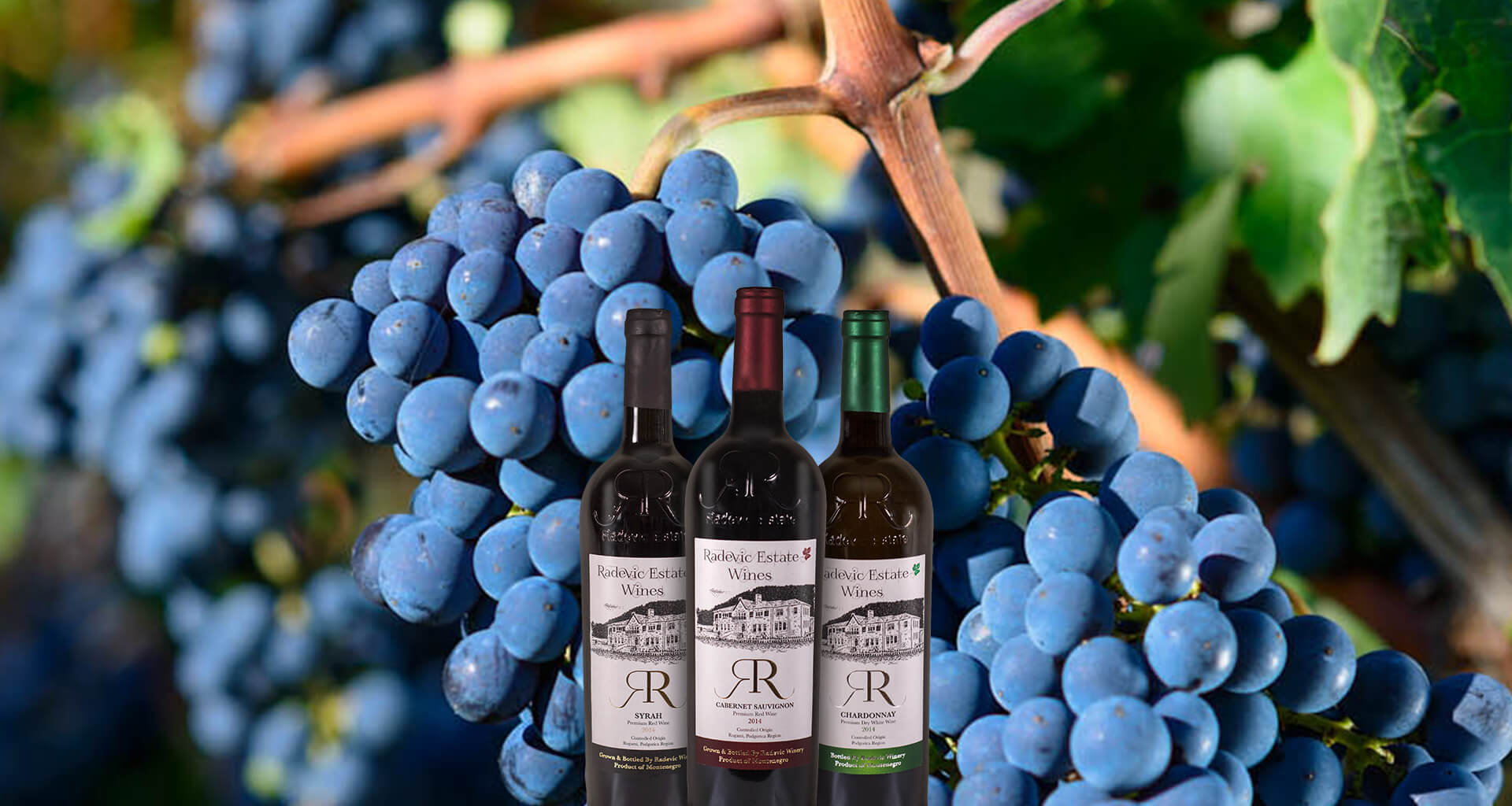
Understanding Montenegrin grape varieties before you visit transforms the tasting experience from pleasant to genuinely illuminating. Vranac and Kratosija are indigenous to Montenegro and the Balkans and have no direct equivalent anywhere in Western European wine culture.
Montenegro's wine identity is built on indigenous varieties that survived centuries of political disruption precisely because they were embedded in local farming culture rather than in commercial wine production. WSET provides a useful guide on how to approach wine tasting with an informed palate. The list below introduces the key varieties you will encounter across Montenegro.
Vranac (Red, Indigenous)
Montenegro's flagship grape. Deep in color with bold tannins, dark cherry, blackberry, plum, and spice. High alcohol with excellent aging potential. Pairs naturally with lamb, grilled meats, aged cheese, and Njeguski prosciutto.
Kratosija (Red, Indigenous)
Montenegro's oldest grape variety, genetically linked to Zinfandel. Spicy, rich, and rustic in character. Best alongside slow-cooked meats, stews, and hearty Montenegrin dishes.
Krstac (White, Indigenous)
Grown exclusively in Montenegro. Dry and full-bodied with stone fruit and herbal notes. Pairs well with Lake Skadar fish, grilled white fish, and lighter cheeses.
Syrah (Red, International)
Dark fruit character with notes of sage, rosemary, and roasted elements, as expressed at Radevic Estate. Pairs with robust red meat dishes and olive-based preparations.
Chardonnay (White, International)
Ranges from crisp and mineral to rich barrel-aged styles depending on the producer. Pairs with seafood, poultry, and soft cheeses.
Malvazija (White, Indigenous)
Aromatic with a distinctly coastal expression. Stone fruit and floral notes. Best alongside Adriatic seafood and light summer dishes.
Vranac deserves particular attention from any visitor with a serious interest in wine. Its name translates as 'black stallion' in Montenegrin, a reference to the grape's characteristically deep, inky color and powerful structure. Vranac is genetically descended from Kratosija and a rare variety called Duljenga, and scientific research has confirmed that Montenegro is the variety's region of origin. It produces wines of remarkable longevity and intensity when grown in the right conditions, and the best examples from the Crmnica and Podgorica subregions can age for decades.
At Radevic Estate, the wine lineup includes estate-grown Vranac alongside Syrah, Chardonnay, and the signature Renee White Port made from late-harvest Chardonnay grapes. Exploring the full wine portfolio before your visit provides useful context for understanding how one boutique estate navigates the relationship between indigenous and international varieties.
What Makes Montenegro Wine Tourism Different
Montenegro wine tourism is fundamentally different from Bordeaux, Tuscany, or Burgundy in ways that make it more compelling for certain travelers: it is less codified, more personal, historically layered, and surrounded by landscape that has nothing in common with Western European wine country.
The differences begin with scale. Most visitors to established wine regions navigate a landscape saturated with tourism infrastructure: wine trains, tasting menus, hotel wine packages, and structured routes designed to process thousands of visitors efficiently. Montenegro's wine tourism scene is at a different stage of development. The infrastructure is less polished but the experiences are more genuine. When you visit a family winery in the Podgorica area, you are typically hosted by the family itself, drinking wines that have won international competition medals, in a setting that has been continuous for generations.
The historical depth is also distinctive. The ruins of Duklija, the Roman city near Podgorica, are a five-minute drive from Radevic Estate. The vineyards around Crmnica have been producing wine in an unbroken tradition since at least the Byzantine period. The terroir of the Skadar Lake Basin was documented by crusaders passing through in the 12th century. Visitors who engage with this history encounter wine not as a lifestyle product but as a living connection to a place.
The landscape context is irreplaceable. Lake Skadar, bordered by limestone mountains and home to one of the most biodiverse wetland ecosystems in Europe, provides a visual backdrop for wine tourism that has no equivalent in France, Italy, or Spain. Tasting Vranac on the shore of a lake that reflects the Dinaric Alps is an experience with no Western European counterpart.
Finally, the value proposition for international visitors is exceptional by European wine tourism standards. A two-hour private estate tour and tasting at a boutique winery with international award-winning wines costs significantly less than a comparable experience in Champagne or the Douro Valley.
Types of Wine Tourism Experiences in Montenegro
Montenegro offers five distinct types of wine tourism experiences, ranging from private estate visits and large winery tours to self-drive wine routes, restaurant tastings, and harvest participation during the August to September picking season.
Private Estate Visit
A by-appointment tour and tasting at a family winery, hosted personally by the winemaking family with full context on the wines and their history. The anchor experience in this category is Radevic Estate in Rogami.
Large Winery Tour
A structured group tour of production facilities including a cellar visit and guided tasting. The standout example is the Plantaze Sipcanik underground cellar in Podgorica.
Wine Route Self-Drive
An independent drive through designated wine roads connecting villages and producers. Key routes include the Crmnica Wine Route and the Ancient Dolcea Wine Route.
Restaurant Wine Experience
Regional wines paired with Montenegrin food at lakeside or coastal restaurants. Particularly strong at Lake Skadar fish restaurants and Podgorica wine bars.
Harvest Participation
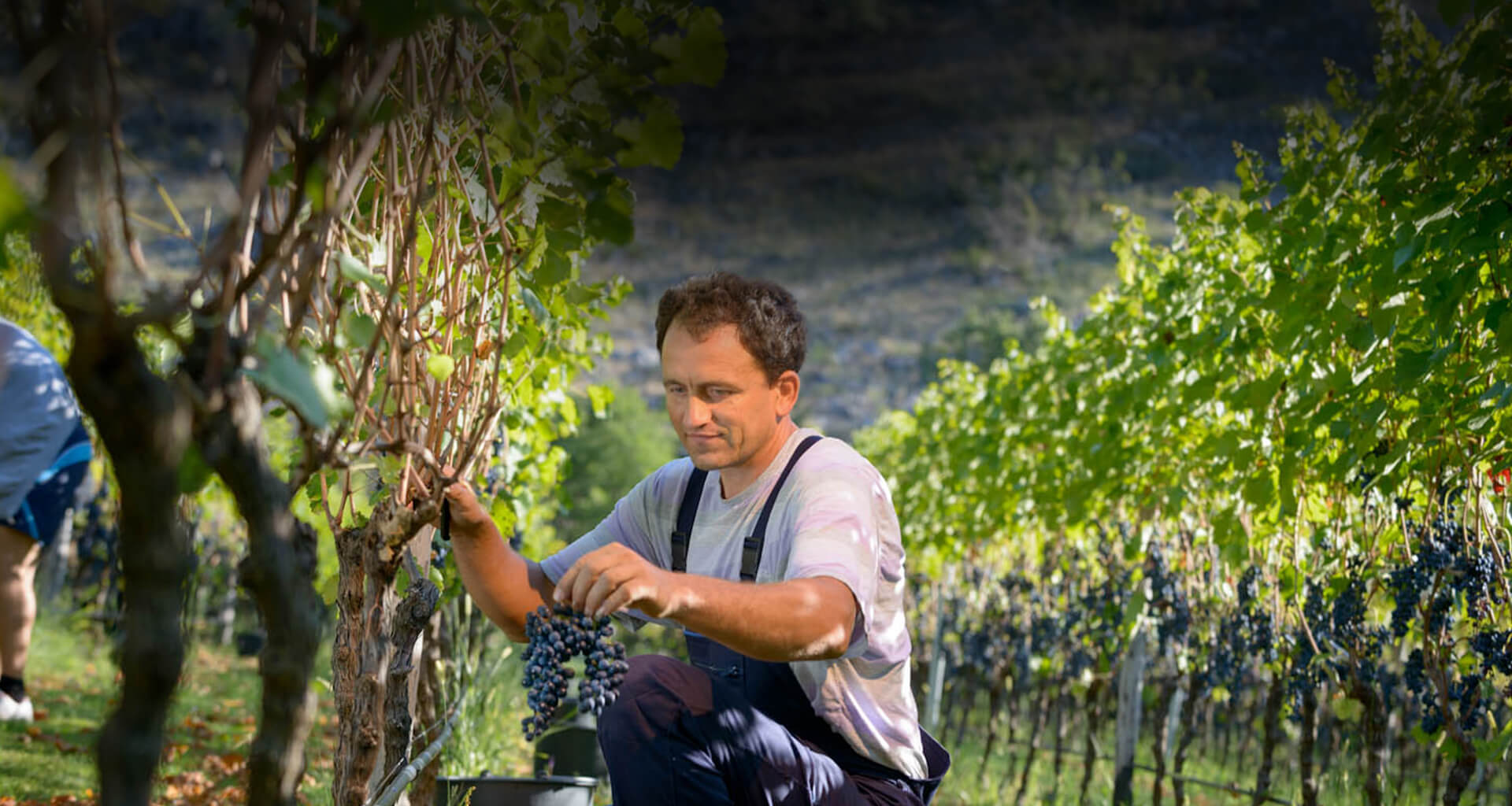
A seasonal visit during the active harvest period from August through September, with the opportunity to join pickers in the vineyard. Available at Plantaze Cemovsko Polje and select boutique family estates.
Private Estate Visits: The Boutique Experience
Private family estates represent the most distinctive and memorable wine tourism experience Montenegro has to offer. They require advance booking and offer a level of personal engagement with the winemaking family that group tours at larger operations cannot replicate. Radevic Estate in Rogami is the anchor experience for the Podgorica area: a twenty-eight generation family winery with a full tour of the vineyard and cellar, an award-winning wine lineup spanning six wines plus spirits and dessert wines, and a two-hour tasting with small-bite pairings. The estate is 10 minutes from central Podgorica, appointment-only, and accommodates groups of 2 to 10 people. All practical booking details are on the Visit Us page.
Plantaze and the Underground Cellar
For visitors who want to understand the scale of Montenegrin wine production, Plantaze Winery offers a different kind of experience. The Sipcanik cellar, located over 30 meters underground in a 356-meter tunnel that was formerly a secret Yugoslav military air force base, is one of the most visually unusual wine destinations in Europe. The estate manages 2,310 hectares of vineyards in Cemovsko Polje, making it the largest single vineyard in Europe, and its wines are exported to over 35 countries. The tasting experience here is organized rather than intimate, but the sheer scale and the underground setting make it worth visiting as a complement to a boutique estate visit.
The Crmnica Wine Route
The Crmnica subregion, along the western shore of Lake Skadar, is considered the ancestral home of Vranac and is designated as part of Montenegro's official wine routes. The Montenegro National Tourism Organization's wine roads document the official routes, including the Crmnica Wine Route and the Ancient Dolcea Wine Route, which passes near the Roman ruins adjacent to the Radevic Estate. Driving these routes independently allows visitors to stop at small producers along the way, taste homemade wines at family-run konobas (traditional taverns), and engage with Montenegrin wine culture at its most local and unmediated.
Montenegrin Wine and Food: What to Eat Alongside What You Drink
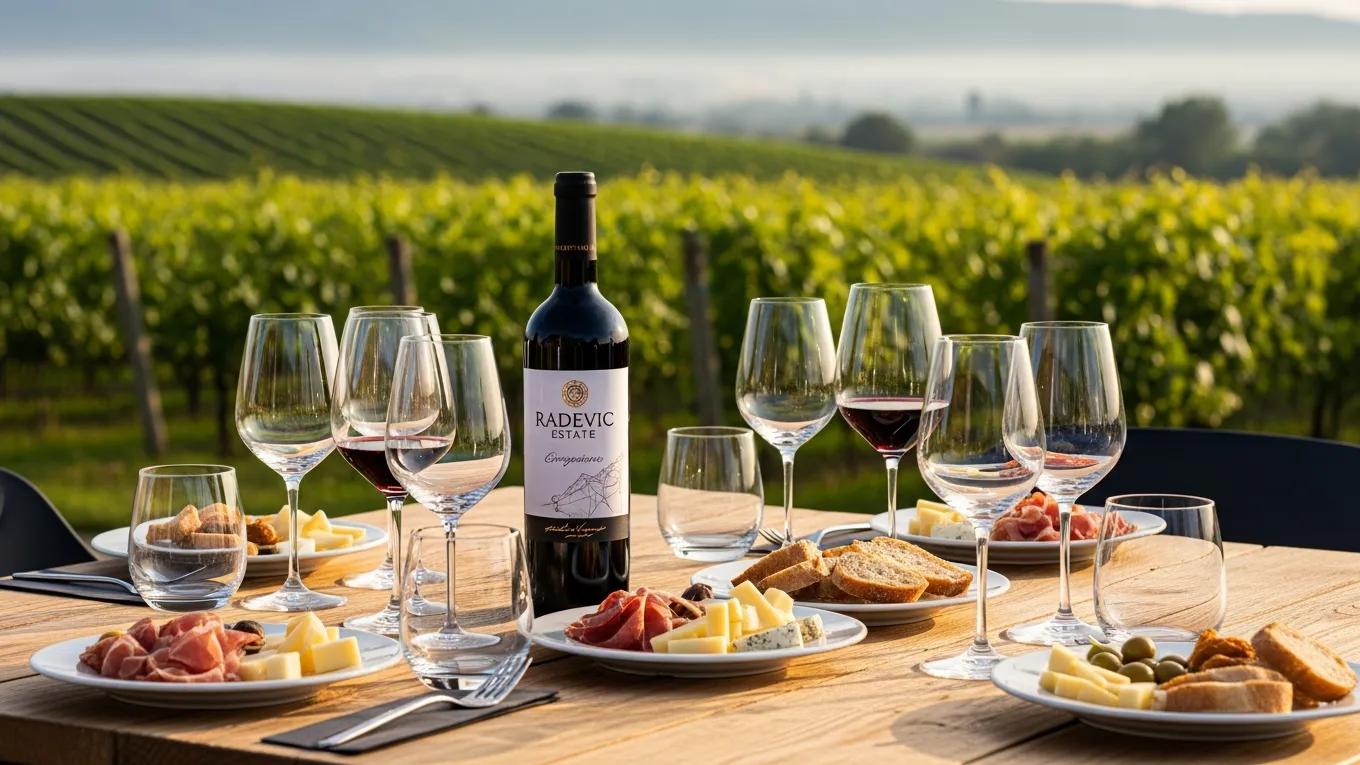
Montenegrin cuisine is built around the same rugged, intensely flavored traditions as its wine, and the pairings are instinctive: bold Vranac with lamb and prosciutto, mineral Krstac with Lake Skadar fish, late-harvest whites with local honey and cheese.
The Njeguski plateau above the Bay of Kotor produces some of the Balkans' most celebrated cured meats and cheeses. Njeguski prosciutto, air-dried and smoked using a technique passed down through generations, is the defining Montenegrin charcuterie and pairs with Vranac with a natural affinity that no amount of wine education can improve upon: the wine's iron-rich fruit and firm tannins cut through the fat, and the salt of the meat amplifies the wine's fruit.
Lake Skadar freshwater fish, particularly carp, bleak (ukljeva), and trout, are the culinary calling card of the lake region. Served fried, marinated, or in stews at the waterside restaurants around the lake shore, they pair naturally with Krstac, Montenegro's indigenous white, which offers the acidity and freshness to balance the richness of freshwater fish.
Traditional bread, local honey, and soft cheeses made from sheep and goat milk round out the picture. Many estate visits, including the full experience at Radevic Estate, include small-bite food pairings that introduce visitors to these combinations in a structured context alongside the wine tasting itself.
How to Plan Your Montenegro Wine Tourism Itinerary
A well-designed Montenegro wine itinerary combines at least one boutique private estate visit, one experience at the Plantaze scale for context, time at Lake Skadar, and either a coastal start or a coastal end for geographic contrast. Three to five days is the minimum to do the country's wine culture justice.
Two-Day Wine Focus Itinerary (Podgorica Base)
Day 1 morning: Arrive in Podgorica via Podgorica Airport (TGD). Collect rental car and check into accommodation in the city.
Day 1 afternoon: Private visit to Radevic Estate in Rogami (10 minutes north of Podgorica). Two-hour full estate experience with tour, six wines, cognac, and food pairings. Book at least 24 hours in advance. Groups of 2 to 10.
Day 1 evening: Dinner in Podgorica with Montenegrin wines by the glass. The city's wine bar scene has grown considerably in recent years.
Day 2 morning: Drive to Plantaze Sipcanik underground cellar for the large-scale estate contrast. Allow two hours.
Day 2 afternoon: Drive the Crmnica Wine Route along the western shore of Lake Skadar. Stop for lunch at a lakeside konoba with fresh fish and Krstac.
Day 2 evening: Return to Podgorica or continue south toward the coast.
Five-Day Coastal and Wine Combined Itinerary
Days 1 to 2: Arrive on the Adriatic coast (Kotor or Budva). Explore the Bay of Kotor, Old Town Kotor, and the Njeguski plateau for prosciutto and cheese.
Day 3: Drive inland to Podgorica (approximately 1.5 hours). Afternoon visit to Radevic Estate. Overnight in Podgorica.
Day 4: Morning at Lake Skadar (boat trip or lakeside drive). Afternoon Crmnica Wine Route with small-producer tastings. Overnight near the lake or return to Podgorica.
Day 5: Plantaze Sipcanik tour in the morning. Afternoon departure or onward travel.
Practical Planning Notes
A rental car is essential for wine tourism outside Podgorica. Public transport does not serve the key wine tourism areas effectively.
Book boutique estate visits at least 24 hours in advance. Summer months (June to August) are the busiest period for tourism and early booking is advisable.
Montenegro uses the Euro. Card payments are widely accepted in Podgorica but you should always confirm when booking at rural estates.
Radevic estate closes throughout January. All other months are available for visits, subject to advance booking.
The official Montenegro tourism website provides current entry requirements, regional transport information, and accommodation resources for international visitors.
Radevic Estate: The Podgorica Area's Anchor Wine Tourism Experience
Radevic Estate in Rogami has been continuously cultivating vines near the ruins of the Roman city of Duklija for twenty-eight generations. It is the most personal, historically rooted, and award-winning private estate visit available in the Podgorica wine region.
The estate sits south-facing at 60 meters altitude above the Zeta River, miles from the Adriatic Sea in a microclimate shaped by the collision of continental and Mediterranean air currents. Its wines, from the estate-grown Vranac and Syrah to the internationally recognized Renee White Port, which has won Silver at the Monde Selection competition for three consecutive vintages, reflect both the character of their terroir and the ambitions of a family that regards itself as the custodian of a centuries-old wine tradition. The full estate story and the team behind the wines are documented on the estate website for visitors who want to arrive prepared for the conversation.
Visits run approximately two hours for the full estate experience and include a tour of the vineyard and winery, a seated tasting of six award-winning wines, the signature Renee dessert wine, the estate's Grand Renee Cognac aged a minimum of eight years in American oak, and small-bite food pairings throughout. A lighter 20 EUR option covering three wines and a schnapps is available for visitors with limited time. Both tiers end with an opportunity to browse and purchase from the wine boutique.
The estate is located in the village of Rogami, 10 minutes from central Podgorica. It is open by appointment only, Monday through Sunday, 10am to 8pm, from February through December. Groups of 2 to 10 people. For full booking details, see the complete visitor guide or go directly to the Visit Us page to make a reservation.
Plan Your Visit to Radevic Estate
Radevic Estate is available by appointment seven days a week, February through December. Booking requires at least 24 hours advance notice. Groups of 2 to 10 people. Tasting experiences from 20 EUR per person.
Book through the Visit Us page, by calling +382-69-276-055, or by emailing [email protected].Get directions to Rogami-Piperi bb, 81000 Podgorica, Montenegro.
Explore the estate wines, read the estate history, or browse the online shop to plan your visit and any purchases in advance.


