
What Is Rakija? A Guide to Montenegro's Traditional Fruit Spirits
If you're offered a small glass of clear or amber liquid the moment you walk into a Montenegrin home, you're being handed rakija, and turning it down outright would be a genuine social misstep. This is the drink almost no English-language travel guide explains properly, despite it being one of the most culturally significant things a visitor will encounter in Montenegro. Here's what it actually is, how it's made, and what to know before your first glass.
What Rakija Actually Is
Rakija is the Balkan term for fruit brandy: a spirit made by fermenting fruit, then distilling the result. It's produced across the wider Balkan region, Serbia, Croatia, Bosnia and Herzegovina, North Macedonia, and Bulgaria all have their own strong traditions, but the base process and cultural role are broadly shared. The word itself traces back through Turkish to an Arabic root associated with distillation, reflecting how the technique spread into the Balkans during the Ottoman period.
Unlike anise-flavored spirits such as Greek or Turkish raki, Balkan rakija is fruit-forward rather than herb-forward. The fruit itself, not a flavoring agent, is the entire point.
How It's Made
Production starts with ripe fruit, most commonly grapes in Montenegro, though plums, pears, quince, and apricots are all used depending on the variety. The fruit is crushed and fermented, a process that typically runs 20 to 40 days depending on the fruit and the weather. Once fermentation completes, the liquid is distilled, sometimes twice, to concentrate the alcohol and refine the flavor. The result can be aged in wooden barrels or large glass vessels, which softens the spirit and, in aged versions, adds complexity closer to what you'd expect from a barrel-aged brandy.
Alcohol content varies enormously. Commercially bottled rakija generally sits around 40% ABV, similar to most Western spirits, but homemade rakija is a different story entirely, often 50 to 80% ABV, occasionally higher. Some households distill twice to produce a "hard" version, sometimes called prepečenica, served in smaller glasses precisely because of its strength, distinct from a "softer" single-distilled version served in the small narrow-necked glass known as a čokanj.
Common Montenegrin Varieties

Montenegro's most widely produced style is lozovača, made from grapes, reflecting the country's strong wine-growing tradition. Beyond that, you'll commonly encounter:
Kruškovača, made from pears, often mild and fruity
Dunjevača, made from quince, fragrant and slightly sweet
Travarica, a grape-based rakija infused with medicinal herbs, often treated as a digestive aid
Medovača, rakija infused with honey for a smoother, sweeter profile
Each region and often each individual household has its own take, which is part of why rakija resists standardization the way commercial spirits elsewhere don't.
Why It Matters So Much in Montenegrin Hospitality
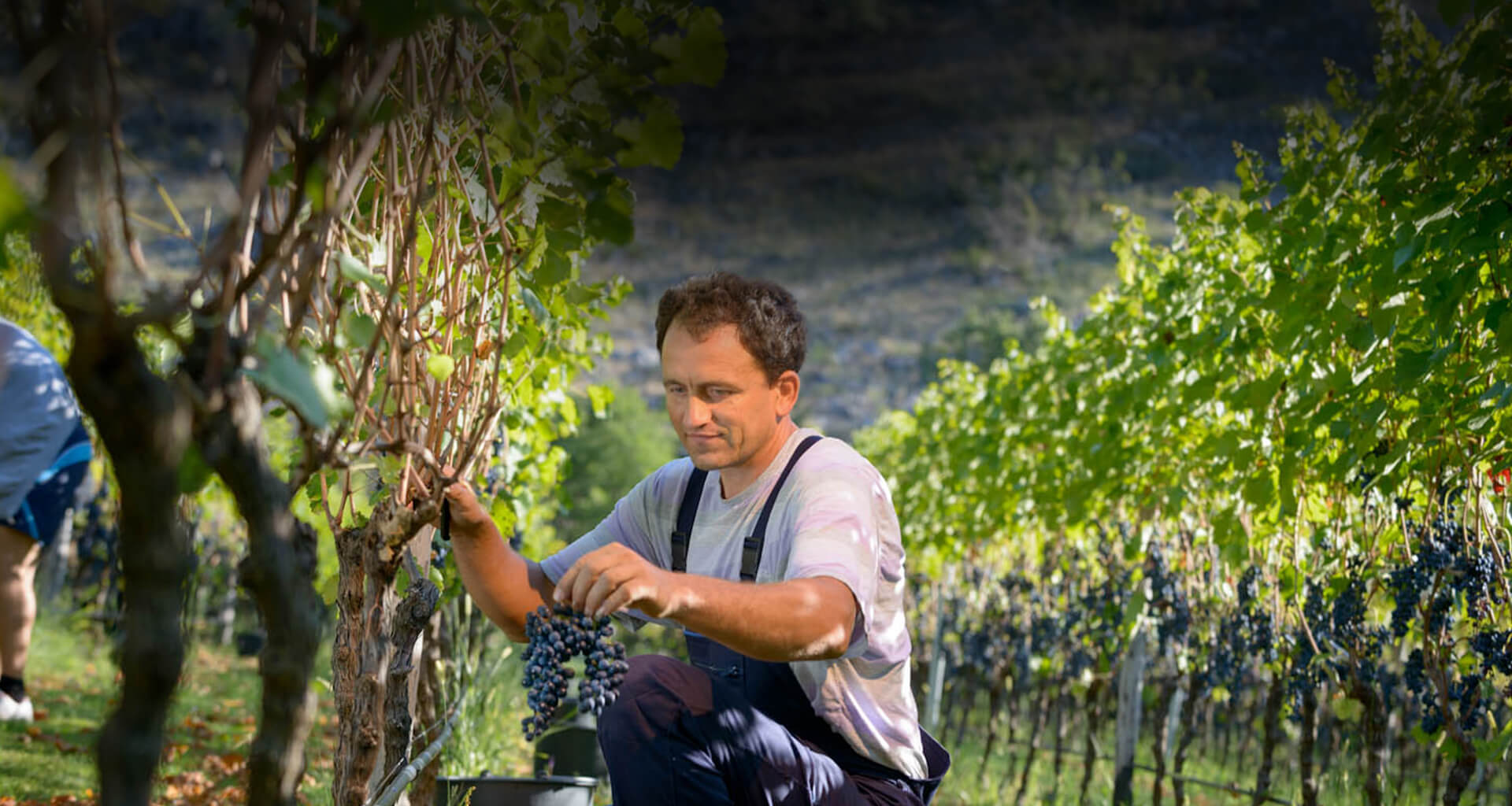
Rakija isn't casually offered, it's practically ceremonial. It's the traditional welcome drink in a Montenegrin home, and it shows up at essentially every major life event: weddings, baptisms, holidays, and funerals alike. Many households, particularly older generations, still make their own, and September is informally treated as wine and brandy-making season across the country, as families process that year's grape and fruit harvest into the next year's supply. That timing lines up closely with the broader harvest window we cover in our guide to Montenegro's wine harvest season.
This household tradition is genuinely under some pressure. EU regulatory alignment and the shift toward apartment living, which leaves less room for the drums, barrels, and outdoor space traditional production requires, mean the home-distilling tradition is gradually declining even as the culture around drinking rakija remains as strong as ever.
One practical note for visitors: because homemade rakija can run so much stronger than what you're used to, treat it the way you would a fine whiskey rather than a shot. Sipping is the norm among people who actually know what they're drinking. Knocking it back like tequila is a good way to have a rough second half of the evening.
Radevic Estate's Fruit Schnapps
At Radevic Estate, we produce our own fruit schnapps as part of this same tradition, made from organically grown local fruit, including a plum schnapps and a quince schnapps, both included in our standard estate tastings. These sit alongside, but are distinct from, our aged Grand Renée XO, which follows a much longer, dual-oak aging process closer to how Cognac and Armagnac are traditionally produced. If you're curious about that specific product and how its production differs from a standard household rakija, we cover it in full in our guide to Grand Renée XO.
Trying Rakija for Yourself
The most authentic way to experience rakija is exactly how Montenegrins do: offered as a welcome drink, shared among a group, and sipped rather than rushed. During a visit to Radevic Estate, our standard tastings include one of our fruit schnapps alongside wine and, in the full tasting tier, our estate cognac, giving visitors a genuine cross-section of Montenegro's spirits tradition rather than just its wine.
Frequently Asked Questions
Is rakija the same thing as schnapps?
Broadly, yes, both terms describe fruit-based spirits, though "rakija" is the specific Balkan term and carries the deeper cultural weight described above. In casual English-language use, the two terms are often used interchangeably for Balkan fruit brandy.
Is it safe to drink homemade rakija offered by a host?
Generally yes, though strength varies widely and isn't always obvious from taste alone. Sip rather than shoot it, especially on a first taste, since you won't know the ABV until you feel it.
Can I buy rakija or schnapps to take home from Radevic Estate?
Yes, through our on-site wine boutique after your tour and tasting, availability depending on current stock.
Ready to Try It Yourself?
Book a tasting through our Visit Us page to try our fruit schnapps alongside our wines and estate cognac. We're 10 minutes from central Podgorica and open year-round except January.


